
“How Long Does Soap Take to Cure” is a common question, and you can master soap curing in a few simple steps that keep lather friendly.
The 4 to 6 week timeline gives water time to evaporate and saponification to finish.
During cold or hot process, you’ll see different stages and moods in bars.
Test readiness with careful weight checks and a gentle pH target, then rest.
Airy racks, weekly turning, and shade away from sun push you toward better bars.
Master the 4–6 Week Cure Timeline
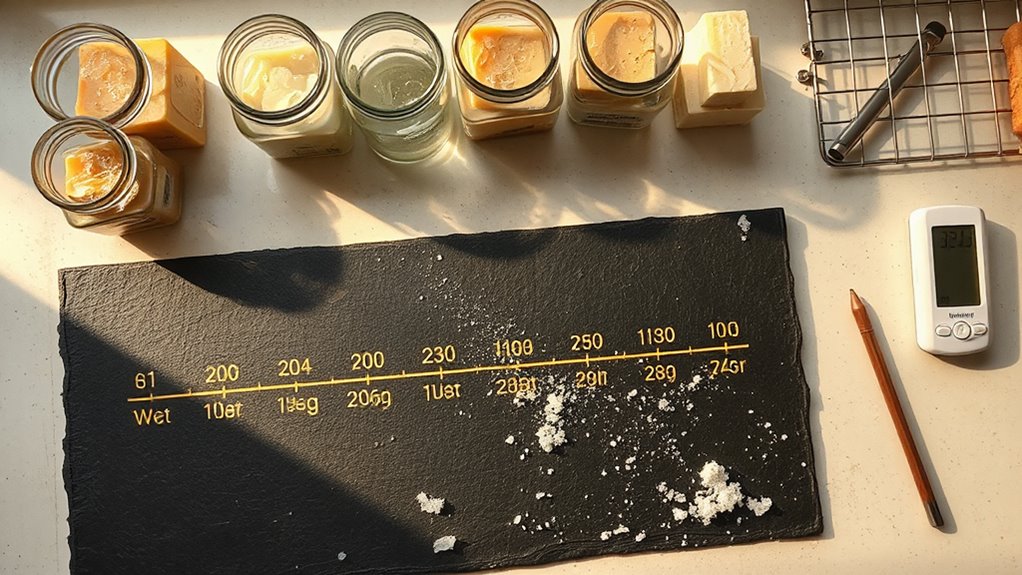
Mastering the 4–6 Week Cure Timeline means turning fresh soap into sturdy bars that last. Patience pays off as water evaporates and bars harden, delivering reliable lather. Plan batches with simple recipe variations and note how oil percentages affect texture and hardness. Start with a basic recipe, then adjust oil percentages to achieve a firmer bar or creamier soap, and keep detailed records. Cure bars on a rack in a dry room, turning them every few days for even drying. Celebrate small wins during the wait, and enjoy the craft with confidence and friends. Using raw, unrefined shea butter can enhance moisturization and hardness in your final bar due to its high fatty acid and unsaponifiable content.
Cold vs Hot Process: What to Expect at Each Stage
When you start soapmaking, the cold and hot processes work differently but end in great bars. In the cold process, you mix lye and oils and let the batter saponify slowly, then cure for several weeks. In the hot process, you cook the mixture so saponification happens during the cook, letting you use bars sooner, though they may dry a bit differently. Process differences show up in texture, hardness, and patience. Both methods benefit from curing to improve lather and mildness, even if one path feels faster and the other more hands-on. You’ll enjoy learning and experimenting with each batch today. For melt-and-pour beginners, adult supervision is recommended due to hot liquids and handling of molds and tools.
Test Readiness: How to Tell When Soap Is Fully Cured
You’ve learned the basics of cold and hot process, and now you want to know when soap is truly ready. Test readiness by checking pH test results and watching weight loss stabilize; you’ll see steady numbers. After 4 to 6 weeks, the soap should shed little moisture, and the weight should be near its final value. Use a reliable pH tester; aim for a gentle range, usually around pH 8 to 9.5, depending on your recipe. If the numbers have settled, you can safely cut and cure longer if you’re unsure, and enjoy your clear, mild bars for everyday use. For melt and pour bases, curing is minimal, but allowing the soap to cool completely ensures optimal creamy texture.
Store and Age: Maximizing Hardness, Lather, and Mildness
Store and age: Maximizing hardness, lather, and mildness
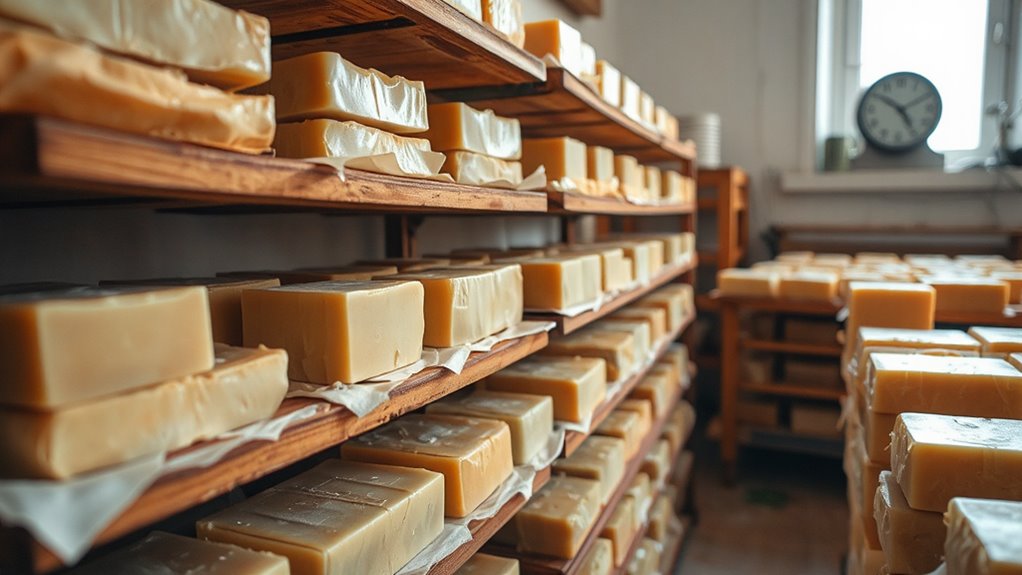
After you cure, proper storage helps your bars stay hard and clean. When you set them on a rack designed for airflow, air moves around each bar, which speeds evaporation and boosts hardness. Keep them away from humidity and direct sunlight for the best aging benefits. Turn bars every few days so moisture leaves evenly, and label shelves so you know which batch is aging. A simple routine, like a weekly check, helps keep lather strong and mild. With patient storage, your soap becomes nicer to use, and the hobby stays fun and rewarding. Share tips with friends, and celebrate small progress together.
Frequently Asked Questions
How Does Climate Affect Cure Time?
Climate speeds or slows cure time: high humidity slows evaporation, extending cure by weeks; hotter temperatures accelerate moisture loss, shortening cure but can cause cracking. You’ll want good airflow, moderate temperatures, and patience for a full, durable cure.
Do Scents or Additives Affect Curing Duration?
Yes, fragrances can slightly affect cure time. Fragrance oils and essential oils may add moisture or slow evaporation, potentially nudging the cure by about a week or two, but curing generally remains 4-6 weeks. You should test and age.
Is Bar Weight Loss a Reliable Cure Indicator?
Bar weight loss alone isn’t a reliable indicator of cure. Monitor water loss and stabilize moisture, and use pH balance together with texture and hardness as your real cues for full cure progression over several weeks.
When Is It Safe to Unmold During Cure?
You can unmold once the soap firms up and its softness decreases. For cold process, that’s usually after 4–6 weeks (hardness increases with temperature); hot process bars are mold-ready in 1–2 days and should not be reheated.
Do Rebatched Soaps Cure Differently Than New Batches?
Yes, rebatched soaps cure differently from new batches: the cure time is often similar, but texture changes progress more slowly and pH remains steadier as water loss stabilizes; they may take longer to harden, yet they can still improve lather.
Conclusion
You can turn plain soap into a durable, bubbly bar with a little patience. As you cure for four to six weeks, stay curious and keep notes for future batches. Place bars on a rack, monitor weight loss, and check that the scent and feel are right before using. If a bar stays a bit soft, that’s fine, just let it cure longer. Share tips with friends, celebrate mini milestones, and enjoy the process of soapmaking becoming a craft you do together.


