Palm Oil Soap Recipe: You can start making palm oil soap with simple steps and a mindful pace.
Choose certified suppliers and track your materials, so every bar stays sustainable and transparent.
The classic mix uses red palm, coconut, and olive oils, balanced with precise lye calculations.
If you prefer a palm free route, try babassu or sunflower oils and castor for lather.
Stick with it, measure carefully, cure properly, and soon you will have solid bars and options.
How to Make a Sustainable Palm Oil Soap (Principles to Follow)

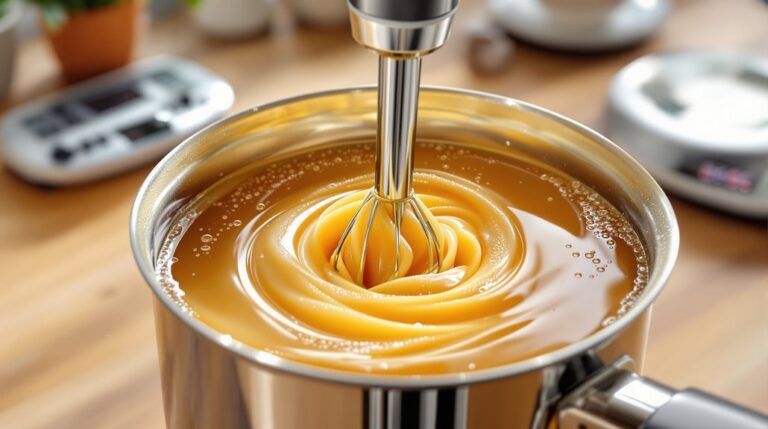
If you want a sustainable palm oil soap, start with clear goals and smart choices. Look for products that disclose sourcing ethics and certification standards so you know where the oil comes from. Ask how fruit trees or palms are grown and how workers are treated. Choose suppliers who share transparent records, audits, and third-party verification. Keep your plan simple, track your sources, and compare labels. Remember that sustainable soap can be fun to make, affordable, and beneficial for the planet, your skin, and your curious, careful mindset. Practice patience, keep learning, and celebrate small wins. For consistent emulsification when blending lye and oils, use a blender with a titanium blades construction to ensure durability and performance.
Classic Palm Oil Soap Formula: Oils, Lye, and Water
Making classic palm oil soap starts with simple, reliable ratios you can trust. You choose oils you like, then mix them with a careful lye and water amount. This Classic Palm Oil Soap Formula keeps things clear by showing oil ratios as a guide and listing the exact saponification values needed for safety. You will measure red palm oil, coconut oil, and olive oil, then add the lye carefully, and finally stir in water until it blends smoothly. The result is practical and fun, a hands-on project you can finish in a weekend with pride, and share with friends. Using cold-pressed olive oil ensures a mild, moisturizing bar with enhanced skin benefits due to preserved natural glycerin and antioxidants.
Palm-Free Substitutes and Viable Alternatives

If you swap palm oil, try babassu with olive, or an olive-babassu blend.
Other viable oil options include sunflower or rice bran blends, or castor boosts to improve lather.
To keep things friendly, add about 2 oz castor to your palm-free mix, and test small batches first.
For enhanced moisturization and skin conditioning, consider incorporating high fatty acids content from shea butter into your palm-free formulation.
Palm-Free Substitutes
Palm-free substitutes open up options for gentler soaps you can customize at home. You can blend babassu to replace palm without losing hardness. Tallow inclusion helps your bar stay firm and easy to handle. Try olive, coconut, or sunflower oils for a creamy base. Start small with a 1 kg test batch to learn fast. Castor adds slip; add 2 oz for extra bubbles. Keep notes so you remember which blend you loved. This hobby stays fun when you use simple substitutes and clear steps. If a batch seems soft, adjust the fat balance next time for best results.
Viable Oil Alternatives
Exploring viable oil alternatives lets you tailor soap to your skin and budget, without palm oil. You can swap in babassu or sunflower for a similar firmness and gentle clean, or mix olive with coconut for a creamy lather you enjoy. Check oil sourcing and ethical concerns before you buy, so your project stays kind to people and planet. Start small, testing 10 to 15 percent substitutions, then scale up as you like. Keep notes on softness, bubbles, and hardness, so future batches are easier. With simple steps, this hobby stays fun, affordable, and empowering in your hands today.
Castor Oil Boosts
Castor oil can boost lather and conditioning when you swap palm oil for a palm-free mix. You’ll notice creamier bubbles and a softer feel, plus easier unmolding as Castor benefits shine. For a palm-free blend, mix 2 parts castor to 6 parts olive to improve viscosity control and thickness. This ratio helps your soap stay firm yet easy to cut, with stable bubbles. Keep experiments small, jot results, and adjust to your scent and color choices. Castor benefits show up as smoother bars and reliable lather in your palm-free formula. Share tips with friends and keep learning together today.
Palm Oil Soap: Step-by-Step Cold Process

If you’re new to soap making, the cold process with palm oil is friendly and fun. Gather oils, lye, and water, then melt and mix gently, watching the batter thicken. Follow Trace stages by adding palm oil, coconut oil, and olive oil in a steady pour, then blend the lye solution in slowly until smooth. Choose scent blends you love, like citrus with vanilla, and stir softly. Pour into a mold, cover, and insulate for a safe, predictable cure. As you wait, note tips for accuracy, temperature, and patience, and celebrate small, rewarding results. You can adjust this anytime.
Troubleshooting Texture, Lather, and Cure Time
If your soap feels crumbly or too soft, you can adjust the texture with a few simple at-home tweaks. For firmer bars, add a touch more palm oil or extend the cure time, then test by pressing gently. If the lather needs help, try a bit more coconut oil or a lighter superfat, and keep notes on your results.
Texture Adjustment Tips
Texture in soap making can swing from soft to firm as you tweak oils, lye, and cure time. You notice hardness control when you adjust palm and coconut ratios, and you feel how the bar firms up as it cures. For better lather stability, swap a bit of olive for coconut or add a touch of castor oil to boost bubbles without making it dry. Keep temps steady, stir gently, and test a small batch first. If it’s too soft, try a pinch more hard fats; if it’s too hard, ease back slightly and let it rest a day before using.
Cure Time Solutions
Cure time matters because soap hardens as it sits, improving hardness and long-lasting lather. After you pour your lye solution and mix, give the soap a calm rest. If the texture seems too soft, you can accelerate cure by letting it sit in a cool, dry place and turning the loaf every few days. For the best feel, aim for an extended cure of at least four weeks, or longer if the weather is humid. Check for a firm bar before cutting, and slice gently to avoid crumbling. If bubbles are weak, adjust fats next batch for a creamier lather and scent.
Scaling and Safety: How to Adjust the Recipe for Bigger Batches

When scaling up, plan ahead and keep measurements accurate so your soap stays safe. Start with a clear batch size and double-check lye safety, then adjust water and oils together. Work in small increments, test temperatures, and maintain a calm workspace. For larger batches, use a digital scale, a wide stirrer, and measured bowls to prevent mis-measurements. Example: scale from 11 oz palm oil, 8 oz coconut oil, 6 oz olive oil, and 2.5 oz lye to 22 oz palm oil, 16 oz coconut oil, 12 oz olive oil, and 5 oz lye (to keep the same lye-to-oil ratio). Keep lye safety front and center, wear gloves, and never rush the mixing stage. Stay safe.
Frequently Asked Questions
Is RSPO Certification Essential for Sustainable Palm Oil?
Not strictly essential. You can advance sustainability through traceability and transparent sourcing, but RSPO certification helps prevent greenwashing and verifies compliance with palm oil standards. To ensure genuine sustainability, verify supplier practices, track your supply chains, and require independent audits.
How Does Palm Oil’s Environmental Impact Compare to Substitutes?
Palm oil generally has higher deforestation and biodiversity loss risks than many substitutes; you should weigh land-use impacts, emissions, and commitments like certifications. Alternatives such as babassu or olive-based blends can reduce harm while maintaining soap quality.
How Can I Source Fair-Trade Palm Oil Locally?
You can source fair-trade palm oil locally by engaging local suppliers and grower cooperatives, requesting certifications, visiting farms, comparing prices and sustainability claims, and supporting monitoring programs that help guarantee fair wages and transparent supply chains.
Can I Make Soap Without Any Palm Oil?
Yes, you can make soap without any palm oil. Substitute with olive oil and coconut oil to balance hardness and lather, and adjust lye calculations and superfat to achieve a stable bar. This approach is gentler and vegan.
Do Additives Significantly Affect Superfat and Cure Time?
Additives can affect superfat and cure time, but not dramatically if you manage additive quantity and account for ingredient solubility; some dissolve slowly, delaying hardening, while others improve moisture retention and texture without compromising the final cure.
Conclusion
Making palm oil soap at home is joyful and doable for beginners. Start with a simple classic formulation and learn as you go. Track your measurements, test small batches, and adjust lye-to-oil ratios. If you choose palm-free, swap in babassu or coconut for a creamy lather. Stay sustainable by sourcing certified oils and noting every batch. Prioritize safety, cure times, and steady practice, and you’ll master the art of soapmaking.