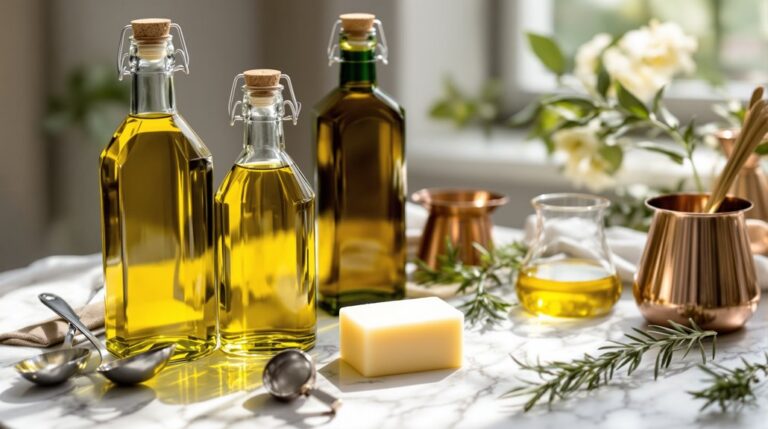
I’ve learned that the best soaps start with trusted essential oils like lavender, tea tree, eucalyptus, and rosemary, chosen for scent, safety, and lasting power.
Best Essential Oils for Soap Making helps guide those choices.
I look for clear GC/COA reports, batch numbers, and quality, organic options help, too.
I keep dilutions around 3 to 6 percent and balance brighter citrus with safer tones, never rushing the cure.
If you want reliable, easy tips that actually work, you’ll want to hear what comes next.
| Majestic Pure Lavender Essential Oil with Dropper 4oz |  | Best Aromatherapy | Category: Essential oil | Primary Use (Aromatherapy): Aromatherapy | Diffuser Use: Diffuser | VIEW LATEST PRICE | Read Our Analysis |
| MAYJAM Tea Tree Essential Oil Gift Set (20x) |  | Best Starter Kit | Category: Essential oil gift set | Primary Use (Aromatherapy): Aromatherapy | Diffuser Use: Diffusers/humidifiers | VIEW LATEST PRICE | Read Our Analysis |
| Majestic Pure Eucalyptus Essential Oil with Dropper 4oz |  | Premium Eucalyptus | Category: Essential oil | Primary Use (Aromatherapy): Aromatherapy | Diffuser Use: Diffuser | VIEW LATEST PRICE | Read Our Analysis |
| KUKKA Rosemary Essential Oils – 4 Oz |  | Hair & Skin Hero | Category: Essential oil | Primary Use (Aromatherapy): Aromatherapy | Diffuser Use: Diffusers/humidifiers | VIEW LATEST PRICE | Read Our Analysis |
More Details on Our Top Picks
Majestic Pure Lavender Essential Oil with Dropper 4oz
If you’re new to soap making, Majestic Pure Lavender Essential Oil with Dropper (4 oz) is a perfect starter kit, since the dropper makes precise use easy. I love the rich, floral scent that fills the room, and the test-strip tip lets me smell without overpowering my batch. This oil is 100% pure and steam-distilled, sourced from Bulgaria and France, so I trust its quality. I dilute a few drops with a carrier oil for skin safety, then add it to soap batter. It makes crafting simple, friendly, and surprisingly fun for beginners like you today.
- Category:Essential oil
- Primary Use (Aromatherapy):Aromatherapy
- Diffuser Use:Diffuser
- Soap Making Compatibility:Yes (soap making)
- Purity Claim:100% Pure/Natural
- Packaging Type:Glass bottle with dropper
- Additional Feature:Bulgaria lavender source
- Additional Feature:Steam distilled
- Additional Feature:Test-strip sampling recommended
MAYJAM Tea Tree Essential Oil Gift Set (20x)
This 20× 5 mL essential oil set is perfect for beginners who want to test many scents in soap making. I love that MAYJAM includes Tea Tree along with Lavender, Eucalyptus, Vanilla, and more in a stylish gift set. These 20 bottles give me options for experiments, and I can test scents for diffusers, soaps, and bath treats. The kit covers a range, including Tea Tree, Lavender, Eucalyptus, Rose, Peppermint, and Lemongrass. This makes it easy to pick a theme and craft soap with balance, while learning safety like dilution and patch tests. Give it a try.
- Category:Essential oil gift set
- Primary Use (Aromatherapy):Aromatherapy
- Diffuser Use:Diffusers/humidifiers
- Soap Making Compatibility:Yes (DIY soap making)
- Purity Claim:Pure Essential Oil
- Packaging Type:5 mL glass bottles (gift set)
- Additional Feature:20-piece gift set
- Additional Feature:5ml bottles
- Additional Feature:Elegant packaging
Majestic Pure Eucalyptus Essential Oil with Dropper 4oz
The Majestic Pure Eucalyptus Essential Oil comes in a 4oz amber bottle with a built-in dropper. I love that it is 100% pure and natural, backed by independent lab testing. It’s premium grade, checked for accuracy, and free of fillers, so I can trust what I’m using in soaps and diffusers. The dropper helps control flow, reducing waste, and the amber bottle protects the oil from UV light. It blends nicely with lavender, lemon, or rosemary, making simple, effective soaps. Easy and approachable, ready for my next home project. I can start today and learn now.
- Category:Essential oil
- Primary Use (Aromatherapy):Aromatherapy
- Diffuser Use:Diffuser
- Soap Making Compatibility:Yes (soap making)
- Purity Claim:100% Pure & Natural
- Packaging Type:Amber glass bottle with dropper
- Additional Feature:Independent lab tested
- Additional Feature:Amber glass bottle
- Additional Feature:Built-in dropper
KUKKA Rosemary Essential Oils – 4 Oz
KUKKA Rosemary Essential Oils comes in a handy 4 oz bottle, a perfect size for hobby soap makers. I use it for hair care, skin care, and DIY soaps because a little goes a long way. The scent is sweet and herbaceous, great in diffusers, candles, and handmade serums. For skin, mix 1–2 drops with a carrier oil to cleanse or nourish dull areas. For hair, add 1–2 drops to daily routines to feel fuller looking and refreshed. Sourced from Spanish rosemary leaves, this oil is cruelty-free and NON-GMO, a clean choice. Perfect for beginners and pros.
- Category:Essential oil
- Primary Use (Aromatherapy):Aromatherapy
- Diffuser Use:Diffusers/humidifiers
- Soap Making Compatibility:Yes (DIY soap making)
- Purity Claim:Premium oil
- Packaging Type:4 Oz bottle (packaging variations possible)
- Additional Feature:Sourced from Spain
- Additional Feature:Cruelty-free, NON-GMO
- Additional Feature:Hair/skin benefits
Factors to Consider When Choosing Essential Oils for Soap Making

When selecting essential oils for soap making, I consider scent strength, how long the aroma lasts, and how each oil behaves in soap. I also review skin compatibility, dilution guidelines, and which carrier oils help keep skin nourished. We’ll cover sourcing and purity, note aroma variations, and share simple, beginner-friendly tips you can try at home.
Scent Strength And Longevity
If you want your soap to smell amazing for longer, start by understanding scent strength. Essential oils vary in fragrance due to their chemical makeup, so you may need larger amounts for a noticeable scent in soap. Top notes like citrus give an initial strong aroma but fade as the soap cures, while base notes like sandalwood stay subtle yet long-lasting.
An oil’s volatility also matters, as highly volatile oils dissipate faster during saponification and curing. Floral oils typically have a moderate scent strength and longevity, offering a balanced aroma. The percentage you use greatly affects both intensity and duration, so start small and test, then adjust thoughtfully. Practice with blotters and soaps to compare results over time.
Skin Compatibility Tips
Choosing essential oils for soap should be careful yet fun, because skin safety matters from the start. I tell readers that dilution is vital, since undiluted oils can irritate or sensitize skin even in small amounts. Citrus oils smell wonderful, but they can raise photosensitivity, so I avoid long sun exposure after applying soaps with them. Some oils, like cinnamon and clove, irritate skin and need very careful use.
A patch test with a diluted drop on a tiny area helps catch reactions before full use. If you have sensitive skin, opt for gentler oils such as lavender or chamomile and keep concentrations lower. It can be simple, enjoyable, and safe when we plan ahead. Together we can craft gentle bars everyone will love.
Dilution And Carrier Needs
After choosing safe essential oils, mix them with a carrier oil so they blend smoothly today. I usually target a 3 to 6 percent dilution for safety. Some oils, like cinnamon or clove, require lower amounts to stay gentle on skin. Carriers such as olive, coconut, almond, and jojoba help shape the soap: olive adds moisture, coconut boosts cleansing, almond is mild, and jojoba helps balance.
Too much essential oil can irritate the skin or make the bar cloudy. Cinnamon or clove may need the lowest dilution to stay safe and comfortable. Testing small batches helps you learn your perfect blend for future batches. Stay within the range and soaps will stay stable. This approach makes soap making approachable for beginners.
Sourcing And Purity
From my soap bench, sourcing the right essential oils matters as much as blending them. Purity affects scent, skin feel, and how long a bar lasts. When I shop, I look for labeled batch numbers, organic or wildcrafted sources, and clear refunds if something isn’t right. I avoid oils that smell like plastic or fade quickly, and I choose vendors who share details about testing for purity.
Practical tip: ask for GC or COA results, ask about storage, and buy small bottles first to test in a recipe. Sourcing trustworthy oils keeps soaps bright, safe, and fun to make. If you feel unsure, start with one essential and build your pantry slowly as you learn. It grows with confidence.
Aroma Profile Variations
Scent choices in soap making aren’t random; they change how a bar feels from first whiff to last lather. Floral oils like lavender yield a rich, mellow scent with fruity hints and can sit at the top of a blend. Herbaceous oils such as rosemary add a sweet, invigorating note that wakes up the senses and makes a bar feel energizing.
Camphoraceous notes from lavender varieties or eucalyptus lend a medicinal, cleansing edge that some people love. Citrus oils provide bright, zippy aromas but may fade faster during curing and on the finished bar. Woody oils like cedarwood or sandalwood offer deep, grounding scents that last a long time. Mixing these wisely helps you craft soaps for everyday moods and seasons as well.
Frequently Asked Questions
How Do I Prevent Fragrance Loss in Soap Curing?
To minimize fragrance loss during soap curing, I insulate bars, maintain moderate temperatures, and shield them from heat, light, and excessive airflow. I choose stable fragrances and use shorter cure times when possible, while testing scent retention.
Can Essential Oils Irritate Sensitive Skin in Soaps?
Yes, essential oils can irritate sensitive skin in soaps. I advise readers to patch-test first, use low concentrations, and choose milder oils. Consider diluting essential oils in a carrier oil, opting for fragrance-free versions, and consulting a dermatologist if irritation occurs.
What’s the Best Dilution Ratio for Skin-Safe Soaps?
Recommended dilution for skin-safe soaps is roughly 0.5%–2% total essential oil. I commonly target 1% for facial products and adjust with appropriate carrier oils, ensuring patch tests and using gentle formulations suitable for sensitive skin at home.
Do Essential Oils Discolor Soap or Affect Lather?
Yes, some essential oils can discolor soap and may slightly affect lather, depending on the oil, concentration, and soap base. I recommend using stable carriers, testing in small batches, and noting any color changes carefully.
How Should I Store Essential Oils to Maintain Potency?
Store essential oils in dark, airtight glass bottles, away from heat and light to preserve potency. Keep them in a cool cabinet and minimize air exposure, moisture, and repeated opening to maintain maximum, long-lasting efficacy.