
Here are my favorites for Best Olive Oil for Soap Making, like Soapeauty Extra Virgin Olive Oil in 32 oz or 7 lb jugs, and the bulk 51 oz options from Amazon, especially the Extra Virgin kind with low acidity.
I look for unrefined, additive-free oils that are mild and moisturizing, and I’ll trade up to larger bottles when I can save money.
Curious how these choices feel in your next batch?
| Soapeauty Extra Virgin Olive Oil 32 oz |  | Best for Skin Care | Type: Olive Oil (Extra Virgin) | Quality: Extra Virgin Olive Oil | Volume: 32 Fl Oz | VIEW LATEST PRICE | Read Our Analysis |
| Amazon Olive Oil Light Flavor 51 oz |  | Best for Light Flavor | Type: Olive Oil (Extra Virgin) | Quality: Extra Virgin Olive Oil | Volume: 51 Fl Oz | VIEW LATEST PRICE | Read Our Analysis |
| Extra Virgin Olive Oil 51 oz (Packaging Varies) |  | Best for Salads | Type: Olive Oil (Extra Virgin) | Quality: Extra Virgin Olive Oil | Volume: 51 Fl Oz | VIEW LATEST PRICE | Read Our Analysis |
| Soapeauty Extra Virgin Olive Oil 7 lb |  | Multi-Purpose Beauty Oil | Type: Olive Oil (Extra Virgin) | Quality: Extra Virgin Olive Oil | Volume: 7 Lb | VIEW LATEST PRICE | Read Our Analysis |
More Details on Our Top Picks
Soapeauty Extra Virgin Olive Oil 32 oz
If you’re seeking a simple, pure soap making oil, Soapeauty Extra Virgin Olive Oil is an excellent choice. It’s 100% pure, natural, unrefined, and cold-pressed, with no additives or fillers, and it comes in a convenient 32 Fl Oz bottle. This oil doubles as a massage oil, body oil, skin moisturizer, and even a light hair conditioner. It nourishes and hydrates, helps protect against environmental damage, and supports healthy skin. Rich in vitamins E and K plus antioxidants, it’s ethically sourced and sustainably produced for peace of mind. A solid everyday option.
- Type:Olive Oil (Extra Virgin)
- Quality:Extra Virgin Olive Oil
- Volume:32 Fl Oz
- Purity:100% pure, unrefined
- Extraction Method:Cold-pressed
- Primary Uses:Cosmetic & skin/hair care
- Additional Feature:Sustainably harvested olives
- Additional Feature:Eco-friendly production standards
- Additional Feature:Vitamins E and K
Amazon Olive Oil Light Flavor 51 oz
This light flavor olive oil is a great pick for soap making because its mild taste won’t overpower your soap’s scent. I like that this 51 oz bottle gives us savings, and the mild flavor keeps soap recipes clean. It has a non-GMO profile and works well in light scents, blends, and even gentle textures. Amazon Fresh changed to Amazon Grocery, but the ingredients stay the same, so your soap stays reliable. I grab it for budget soaps, bake experiments, and quick batch refills, then share tips with you. Store it cool, seal tight, and label the scent trials.
- Type:Olive Oil (Extra Virgin)
- Quality:Extra Virgin Olive Oil
- Volume:51 Fl Oz
- Purity:Non-GMO
- Extraction Method:Not specified
- Primary Uses:Cooking (general grocery use)
- Additional Feature:Non-GMO
- Additional Feature:Packaging variations
- Additional Feature:Formerly Amazon Fresh branding
Extra Virgin Olive Oil 51 oz (Packaging Varies)
A 51 oz bottle of Extra Virgin Olive Oil is perfect for beginners who want gentle soaps. I use it from the Amazon Grocery lineup, and it stays cold extracted, which helps soaps feel smooth. Packaging varies, but the quality stays solid, and the ingredients stay non-GMO, a plus for clean crafts. I like to soap with it because it blends well, rinses easy, and leaves a mild lather. For beginners, start with small batches, warm gently, and test a small bar before the full batch. Remember, this oil is versatile at meals too, which keeps projects fun ahead.
- Type:Olive Oil (Extra Virgin)
- Quality:Extra Virgin Olive Oil
- Volume:51 Fl Oz
- Purity:Non-GMO
- Extraction Method:Cold extracted
- Primary Uses:Cooking (great for salads, marinades)
- Additional Feature:Non-GMO Project Verified
- Additional Feature:Packaging variations possible
- Additional Feature:Previously Amazon Fresh
Soapeauty Extra Virgin Olive Oil 7 lb
For hobby soap makers seeking a pure, easy start, Soapeauty Extra Virgin Olive Oil (7 lb) is your best choice. It’s 100% pure and unrefined, with hand-picked olives and no additives, making soap making simpler and cleaner. This oil functions as a great moisturizer, helping soften skin, condition hair, and support nails during your projects. Nutrients like vitamins E and K hydrate, protect, and keep your final bars smooth, rich, and long-lasting. Use it as a massage oil, a carrier for essential oils, or straight in soap for beginner-friendly batches. Give it a try.
- Type:Olive Oil (Extra Virgin)
- Quality:Extra Virgin Olive Oil
- Volume:7 Lb
- Purity:100% pure, unrefined
- Extraction Method:Not specified
- Primary Uses:Cosmetic & multipurpose (soap making, carrier oil)
- Additional Feature:Hand-picked olives
- Additional Feature:Softens cuticles
- Additional Feature:7 Pound volume
Factors to Consider When Choosing Olive Oil for Soap Making
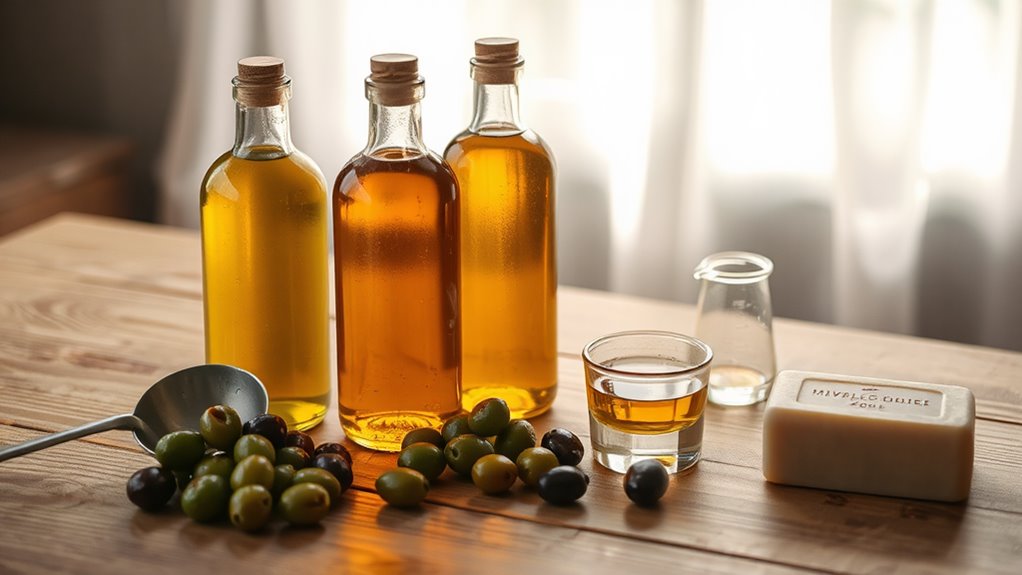
Choosing olive oil for soap begins with purity and quality. I look for clean, unfiltered bottles and prefer cold-pressed extraction to preserve nutrients and aroma. Ethical sourcing matters to me, and I like knowing the oil supports farmers. The nutrient content influences how the soap feels on skin.
Purity And Quality
If you want your soap to feel rich and skin-friendly, unrefined olive oil is a great choice. I target purity marks like Extra Virgin because they indicate less processing and typically lower acidity. Higher quality oil has low free oleic acid, which helps your soap stay fresh longer and look nicer.
Cold pressing matters too, since it preserves glycerin that adds moisture to the skin without extra heat. I prefer oils with no added chemicals, fragrances, or preservatives, because a simple, natural base makes soap gentler. Prioritizing purity and quality keeps your soap reliable, affordable, and easy to make at home, so you can enjoy crafting without guesswork. Remember to check storage, as light and heat can raise acidity. Keep it cool for longer.
Extraction Method
Olive oil quality starts with how it’s made, not just what it costs, and that matters for soap. I look for extraction methods that preserve aroma and mildness, avoiding harsh processing that dulls them. Cold pressing stays under 80 degrees, helping preserve beneficial compounds and leaving soap feeling smoother. Expeller pressing is a gentle mechanical method that extracts oil with limited heat.
Centrifuge extraction moves water and solids quickly, yielding large batches but potentially altering some quality traits. Refining removes impurities with heat and solvents, yet also washes away natural notes that are good for handmade soap. Lower acidity, usually below 0.8 percent for extra virgin, helps soaps last longer and feel milder. Choosing a method means balancing flavor, cost, and the soap’s overall character day to day.
Cold Pressed Advantage
When you choose cold-pressed olive oil, your soap will be gentler and feel nicer. Cold pressing preserves nutrients and antioxidants, helping soap stay moisturizing and mild. Unlike refined oils, the oil retains color, aroma, and flavor compounds, giving soap character. Without heat or solvents, oleic acid remains steady, so lather stays gentle and smooth.
Cold-pressed oil also tends to have lower acidity, which supports shelf life and predictable saponification. It also yields a richer mix of unsaponifiables, those conditioning bits that leave bars soft. Start small with a quiet blend, then notice how the soap feels smoother after cure. Keep the oil fresh in a cool, dark cupboard and test saponification a week before large batches. Have fun experimenting.
Sourcing Ethically
Beyond how cold pressing keeps oils gentle, consider where it comes from. Ethical sourcing means fair labor practices throughout olive growing and oil extraction, and that matters to the soaps you make. Sustainable harvesting keeps environmental impact low and olive groves healthy for years to come.
Transparency in the supply chain helps you verify origin and how olives are treated. Supporting producers who commit to environmental standards protects biodiversity in growing regions. Certifications from trusted organizations can back up claims of ethical and sustainable sourcing, giving you confidence. Look for clear labels, ask questions, and choose brands that share their stories with you. If you see certifications, they help confirm your choice is responsible for your soap.
Nutrient Content
Because nutrient content matters, I choose olive oil with traits that support soap making. I want a soap that lasts and feels good on skin, so I look for vitamin E to slow rancidity and keep bars fresh. Oleic acid is high, about 55 to 83 percent, yielding a mild, moisturizing feel and a creamy lather.
I also consider the 1 to 2 percent unsaponifiable parts, like phytosterols, which stay in the soap and support skin conditioning. Polyphenols add protective vibes, even though some fade during saponification. Finally, linoleic acid, around 3 to 20 percent, helps with lather stability and extra conditioning in the finished bar. Choosing oil with these traits helps beginners make reliable batches and learn soap science joyfully at home.
Aroma Profile
Olive oil’s aroma can shape your soap, even before you add any scent. I notice that fresh oil smells like leafy grass or apples, and that sets the mood for the whole bar. When I choose oil, I look for a clean, fruity note and avoid strong painty smells that hint at aging. The variety of olives, how the oil is pressed, and how fresh it is all matter.
A milder, greener oil blends well with floral scents, while a richer olive brings warmth to spicy soaps. I store oil in a cool place and use it within a few months to keep its aroma bright. Test small batches, sample, and note how the scent fades or shines in your final bar for better results.
Price And Availability
Smart shoppers save by buying olive oil in larger, multi-liter containers. Larger volumes reduce the cost per ounce, which helps when you make soaps regularly. Availability shifts with harvests and seasonal demand, so I plan ahead for steady supplies. Shipping adds a big chunk to the price, especially for heavy oils sold in 7 lb containers.
Refined oil is usually cheaper than unrefined, which costs more due to extra processing. Buying in bulk upfront can secure lower unit prices than frequent small orders. I monitor availability and compare prices before adding to carts. If a supplier offers free shipping on large orders, it becomes a smart move. That helps keep soap projects affordable and enjoyable.
Frequently Asked Questions
Is Cold-Pressed Olive Oil Best for Saponification?
Yes, cold-pressed is best for saponification, in my view. I favor cold-pressed extra virgin for gentle cleansing and good lather, though refined oils work too; it’s about fatty acids and accuracy in your recipe balance.
Will Olive Oil Cause Sweating in Soap?
Olive oil can contribute to sweating in soap if the cure is insufficient or humidity is high, particularly with a high superfat. To minimize this, cure the soap fully, use a balanced water amount, and calculate the lye carefully for a stable bar.
How Does Olive Oil Grade Affect Soap Hardness?
Higher-grade olive oil, such as extra virgin, tends to yield milder soap with softer bars, while refined oils tend to produce harder bars. The grade influences fatty acid composition and saponification value, which in turn affect soap hardness and overall texture.
Should I Blend Olive Oil With Coconut for Lather?
Yes, I blend olive oil with coconut oil for lather. Coconut boosts bubbles and cleansing, but too much can be harsh, so I balance it with olive oil to maintain mildness and a creamy soap.
Do Antioxidants in Olive Oil Impact Shelf Life of Soap?
Yes, antioxidants in olive oil can help extend the soap’s shelf life by slowing oxidation and rancidity. I use vitamin E and proper storage, but the heat of saponification can diminish antioxidant effects, so I blend carefully.


