I love finding the Best Soap Molds because they make crafting easy and fun.
With silicone options like a two mold kit or three packs, versatility is built in. They hold details well, release cleanly, and stand up to cold or hot soap techniques.
I’ll mix colors in layers, use small shapes for dividers, then try swirls without tearing.
If you want a simple start, the right kit makes everything easier, and you’ll see.
| Two Silicone Soap Molds Kit with Slicers |  | Versatile Molding Kit | Material: Silicone | Temperature Range: -40°F to 446°F (-40°C to +230°C) | Release / Non-stick: (Not explicitly stated) | VIEW LATEST PRICE | Read Our Analysis |
| SJ Silicone Soap Molds 3-Pack Rectangle 6-Cavity |  | Versatile Rectangle Set | Material: Silicone | Temperature Range: -104°F to 446°F | Release / Non-stick: Non-stick, easy-release surface | VIEW LATEST PRICE | Read Our Analysis |
| Owl Silicone Mold for Candle and Resin Ornaments |  | Decorative Owl Mold | Material: Silicone | Temperature Range: Not specified | Release / Non-stick: Facilitates easy demolding | VIEW LATEST PRICE | Read Our Analysis |
| Walfos Silicone Soap Molds Set of 3 |  | Best-Selling Set | Material: Silicone | Temperature Range: -104°F to 446°F | Release / Non-stick: Non-stick, durable, reusable | VIEW LATEST PRICE | Read Our Analysis |
More Details on Our Top Picks
Two Silicone Soap Molds Kit with Slicers
If you’re looking for an easy, fun way to make neat soaps, this two-silicone-mold kit with slicers is perfect for you. It includes two 44 oz molds in purple and pink, plus stainless steel slicers with wave and straight-cut options. These molds work with CP and MP soaps, and the loaf has ten slots with one-inch cuts for easy sizing. The silicone is thick and robust, handling heat from -40°F to +446°F, and you can microwave, refrigerate, freeze, or dishwasher them. I use these for soap, plus desserts, pastries, jelly, or even muffins when I’m feeling creative.
- Material:Silicone
- Temperature Range:-40°F to 446°F (-40°C to +230°C)
- Release / Non-stick:(Not explicitly stated)
- Primary Use / Applications:Loaf, dessert, pastry, chocolate, jelly, muffin; soap making
- Cavities / Capacity:10 slots (1-inch cuts)
- Safety / BPA-Free:Not specified
- Additional Feature:10-slot loaf mold
- Additional Feature:Wavy & straight slicers
- Additional Feature:Purple/Pink colors
SJ Silicone Soap Molds 3-Pack Rectangle 6-Cavity
The SJ Silicone Soap Molds come as a 3-pack featuring rectangle trays with six cavities each. The soft, flexible silicone makes soap easy to release and cleanup. The material is food safe, BPA free, and heat resistant for daily use. Each cavity holds about 2.8 fluid ounces, allowing you to create several small bars. The trays measure 7.8 by 7 inches, and the six cavities provide ample space for creativity. I use them for soaps, jelly, chocolates, or tiny desserts, then pop them out by pressing from the bottom to keep things neat for the next project.
- Material:Silicone
- Temperature Range:-104°F to 446°F
- Release / Non-stick:Non-stick, easy-release surface
- Primary Use / Applications:Soap making, jelly, chocolate, ice cubes, desserts
- Cavities / Capacity:6 cavities per mold (3 packs)
- Safety / BPA-Free:BPA-free
- Additional Feature:Three-pack rectangle mold
- Additional Feature:2.8 fl oz cavities
- Additional Feature:Gently release from bottom
Owl Silicone Mold for Candle and Resin Ornaments
This owl silicone mold is ideal for beginners seeking a playful, low-fuss project. It shapes owl figurines, owl candles, and charming resin ornaments. The silicone is sturdy yet flexible, making demolding easy without damage. You can pour wax, epoxy, plaster, or clay and still capture fine details. Drill a small hole, thread the wick, keep it taut, and pour. When it cools, demold to reveal feather textures and limb shapes. Display on a shelf, balcony, or garden, or give a handmade owl as a gift. This mold works for resin ornaments, candle accents, or kid-friendly crafts.
- Material:Silicone
- Temperature Range:Not specified
- Release / Non-stick:Facilitates easy demolding
- Primary Use / Applications:Wax, epoxy resin, plaster, clay crafts; owl figurines
- Cavities / Capacity:Not specified
- Safety / BPA-Free:Not specified
- Additional Feature:Owl-shaped design
- Additional Feature:Multi-material compatible
- Additional Feature:Easy demolding
Walfos Silicone Soap Molds Set of 3
The Walfos Silicone Soap Molds Set of 3 is perfect for beginners who want simple, clean designs. This set includes three rectangular silicone molds, each with six cavities, so you can create multiple shapes at once. The flexible, non-stick silicone is food grade and BPA-free, making it safe for soap, chocolates, and other treats. They withstand a wide range of temperatures from -104 to 446 degrees Fahrenheit, so you can heat or chill your creations with ease. These molds fit in microwaves, ovens, refrigerators, and freezers, and cleanup is a breeze in the dishwasher. Great for soap, chocolate, or ice cubes, have fun with a variety of projects.
- Material:Silicone
- Temperature Range:-104°F to 446°F
- Release / Non-stick:Non-stick, durable, reusable
- Primary Use / Applications:Soap, cake, chocolate, ice cubes, muffins, brownies, panna cotta
- Cavities / Capacity:6 cavities per mold
- Safety / BPA-Free:BPA-free
- Additional Feature:Three-mold set
- Additional Feature:6 cavities each
- Additional Feature:Warranty included
Factors to Consider When Choosing Soap Molds
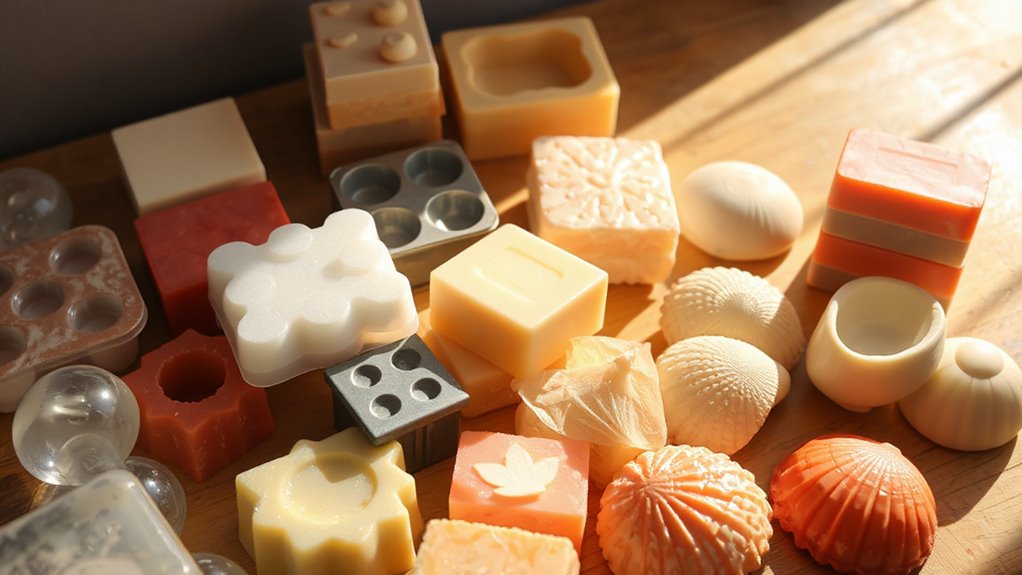
When choosing soap molds, I evaluate material quality to ensure they’re safe for use. Size and capacity matter, so I select a mold that fits my batch and allows space for curing. I also consider the temperature range, flexibility and durability, as well as how easily the soap releases from the mold to keep cleanup simple.
Material Quality
Choosing soap molds starts with material quality, because the right silicone helps every batch go smoothly. I look for food-grade silicone, a key sign it’s non-toxic and safe for skin contact. A mold that lasts matters too, so I check thickness and elasticity to see if it can handle repeated use without losing shape.
Higher-grade silicone offers a natural non-stick surface, which makes demolding easier and protects delicate swirls. BPA-free silicone is essential, since it reduces the chance of harmful chemicals leaching into the soap during curing. With these basics, you can pick molds that feel sturdy, safe, and beginner-friendly, turning soap making into a fun, repeatable hobby. Practice helps you learn which brands work best today.
Size And Capacity
Size and capacity matter when choosing molds because they shape your batches and flexibility. Cavity sizes vary widely, from under 1 fluid ounce for tiny soaps to over 44 ounces for large loaf molds, so you can select what fits your project. The number of cavities per mold also matters, ranging from single cavities to sets with six or more, which helps you produce many bars at once.
Loaf molds typically have multiple slots, often ten, keeping bars the same size (about 1 inch cuts). Cavity dimensions also determine the shape, with typical sizes around 3.15 by 2.15 by 0.75 inches to 3.1 by 2.2 by 0.8 inches. Remember the total tray dimensions for storage and handling ease, such as 7.8 by 7 by 0.8 inches.
Temperature Range
Since molds must handle heat and cold, I look for a wide temperature range to keep things safe and fun. Silicone molds generally withstand a wide temperature range, typically from -40°C to 230°C, which covers freezing and baking. Temperature resistance matters because hot process soap involves pouring heated liquids into the mold without worry. Lower limits matter when you do cold process soaps or freeze desserts in the same mold.
A broader range means more versatility, letting the same mold handle different projects, from soaps to melts. Look for molds that stay solid and maintain shape as temperatures shift, avoiding sagging or cracking. Practical tip: test one batch in your kitchen by slowly heating, then cooling, to confirm stability. This quick check helps you avoid surprises.
Flexibility And Durability
Flexibility and durability matter, and silicone molds excel here, making demolding easy. I love how silicone bends without cracking, so soaps pop out gently whenever I push from the bottom. This material also handles cold and heat well, from freezing baths to warm ovens, which keeps my experiments safe.
Thick, sturdy silicone offers long life, so I can reuse the same mold many times without losing shape. When the mold stays elastic, it resists tears even after lots of bending, saving money. Non-stick surfaces mean gentler removal, which protects delicate swirls and foamy textures I worked hard to create. If you mix colors, you can still separate layers easily, and you can clean up fast with warm water and soap afterward.
Release Ease
From the last topic on how silicone bends, you can see why release is a breeze. Silicone molds generally release easier than rigid plastic molds because of their flexibility. The non-stick properties of silicone, enhanced by high-grade formulations, help demold cleanly. Mold designs with smooth, angled cavities make release smoother and reduce tearing.
Temperature matters: fully cooled soap comes out cleaner from silicone. Gentle pressure on the bottom of a flexible mold can help pop the soap out. Practically, cooling, then a light squeeze to finish, and you’ll avoid tears. I like to test a soap in two corners first. With the right mold, release can feel simple and fun. So choose silicone with smooth surfaces and generous angles for best results today.
Dishwasher Compatibility
Dishwasher use is convenient, but not all silicone molds survive the high heat. Quality matters, and the dishwasher’s heat settings can push even good silicone past its limit, especially with frequent cycles. Some molds may warp or lose shape after many washes, while others resist deformation better.
Repeated dishwashing can leave a dull discoloration or a slightly sticky film on surfaces, though that hardly ever affects how residues rinse away. Most silicone molds are labeled dishwasher safe, but I still recommend handwashing to keep them in top shape and extend their life. The typical dishwasher runs around 120 to 170 degrees Fahrenheit, which is usually safe, but additives in the silicone can change its durability. That means check labels and test.
Versatile Uses
If you want to try more than soap, silicone molds work for chocolate, jelly, muffins, and cheesecakes. They withstand temperature changes, so you can freeze ice cubes or bake brownies in the same mold. Mold shapes and cavity sizes vary, letting you make ornaments, small figurines, or large loaf soaps.
Silicone also releases easier, which helps unmold panna cotta or even resin art without damage. You can make large loaf soaps or small individual bars, giving you options for gifts or party favors. These versatile tips let you plan batches, save time, and experiment with colors and layers. Start simple, then try a fancy detail when you feel confident. With a little practice, you will surprise friends with tasty treats and pretty creams too.
Frequently Asked Questions
Are Silicone Molds Suitable for Melt-And-Pour Soap Base?
Yes, silicone molds are suitable for melt-and-pour soap base. They release easily, withstand the heat, and are durable. I like using them for designs, and remember to avoid sharp molds that could cut the soap.
How Do I Release Soap Easily From Silicone Molds?
To release soap from a silicone mold, gently twist the mold, then pop the soap out from the bottom. If needed, chill the mold briefly or dust lightly with a small amount of baking soda to reduce sticking.
Can Molds Be Used for Candles or Resin Too?
Yes, you can reuse molds for candles and resin as well. I test temperature ratings, use a release agent, and guarantee the mold stays flexible. Just mind cure times, fumes, and safety, don’t skip when pouring and releasing carefully.
What’s the Best Way to Clean Intricate Molds?
To clean intricate molds, soak in warm, soapy water, then gently scrub with a soft brush to lift residue. Rinse thoroughly, dry completely, and store upright. For stubborn buildup, follow with a vinegar soak.
Do Some Molds Affect Fragrance Retention in Soap?
Yes, some molds can affect fragrance retention because porous materials absorb scent and interfere with curing. I recommend non-porous silicone or plastic molds to minimize scent loss and keep your bars evenly fragranced.